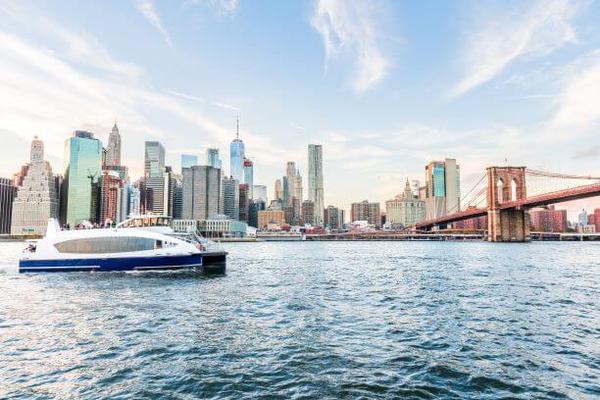
Injured maritime workers in New York City, New Jersey ports and offshore locations have special legal rights under federal maritime law. The maritime accident attorneys at Hofmann & Schweitzer represent injured seamen, dock workers, longshoremen and offshore employees, helping them recover full compensation through Jones Act claims, vessel negligence lawsuits, unseaworthiness claims and maintenance and cure benefits. With more than 35 years of maritime experience and offices in Manhattan and Raritan, New Jersey, our firm serves injured workers throughout the five boroughs — Manhattan, Brooklyn, Queens, the Bronx and Staten Island — as well as Newark, Jersey City and every major port in the New York metropolitan area. Call our New York office at 212-465-8840 or our New Jersey office at 908-393-5662 for a free, no-obligation case evaluation.
Free Maritime Injury Consultation
Table of Contents
- New York Maritime Accident & Injury Attorneys
- Table of Contents
- What to Do After a Maritime Accident in NYC
- Maritime Workers We Represent Across New York & New Jersey
- Federal Maritime Laws Protecting New York & New Jersey Workers
- Types of Maritime Injury Claims We Handle
- Compensation Available for Maritime Injuries
- Common Maritime Accidents in NYC Waters & NJ Ports
- How We Build Strong Maritime Injury Cases
- Frequently Asked Questions About Maritime Injuries
- When do I need a maritime accident lawyer in New York?
- What compensation can I recover for a maritime injury in NYC?
- How long do I have to file a maritime injury claim in New York?
- What is the Jones Act and how does it protect maritime workers?
- What is the difference between the Jones Act and the Longshore Act?
- What if my maritime injury was partially my own fault?
- Why Choose Hofmann & Schweitzer for Your Maritime Case
- Contact Our NYC & NJ Maritime Accident Lawyers Today
What to Do After a Maritime Accident in NYC
The steps you take in the hours and days after a maritime accident can determine the outcome of your claim. To protect your health and your right to compensation:.jpg)
- Seek immediate medical attention. Your health comes first, and medical records are critical evidence.
- Report the accident to your supervisor. Follow company protocols, but keep your statements brief and factual.
- Document everything. Take photos, collect witness names and contact information, and preserve any equipment involved. Learn why you must file a maritime injury accident report quickly.
- Do not sign anything without legal review. Never sign waivers, releases or settlement offers before speaking with a maritime attorney. If you have already been offered a settlement, learn why you should talk to a maritime lawyer first.
- Contact an experienced maritime attorney immediately to protect your rights and preserve time-sensitive evidence.
Time is critical in maritime injury cases. Evidence can disappear quickly, crews transfer, and federal law imposes strict deadlines for preserving your rights.
Maritime Workers We Represent Across New York & New Jersey
Maritime jobs span the water and the shore. At Hofmann & Schweitzer, our New York maritime attorneys protect the rights of all maritime workers injured on the water or docks in New York and New Jersey, in the nation's harbors and inland waterways, and out at sea. The injured maritime workers we commonly represent include:
Seamen and Crew Members
Seamen operate commercial vessels on oceans, lakes and rivers, standing watch, navigating, operating deck machinery and cargo equipment, and performing repairs and maintenance. Injured crew members are often protected by the Jones Act. Read more about the rights of injured maritime workers in New York.
Fishermen and Commercial Fishing Crews
Commercial fishing is one of the most dangerous occupations in the country. Fishermen operate nets, trawls and lines, process the catch, and maintain gear, frequently in hazardous weather. Our attorneys handle payment and recovery options for commercial fishing injuries.
Dock Workers and Longshoremen
Dock workers and longshoremen load and unload cargo, operate cranes and forklifts, and secure cargo for transport. Many are covered by the Longshore and Harbor Workers' Compensation Act rather than the Jones Act.
Harbor Workers and Dockbuilders
Harbor workers assist with docking and mooring, operate tugboats, and maintain harbor infrastructure. Dockbuilders face unique risks; learn what dockbuilders should do if injured on the job.
Ship Builders and Ship Repairers
Ship builders and repairers weld, cut and fabricate ship components, install equipment, and repair existing vessels, often exposed to toxic substances and heavy machinery. Many non-crew maritime workers still have strong claims — review the rights of non-seaman maritime workers.
Even if your specific job title is not listed here, you may still be eligible to file a claim as a maritime worker. Our maritime injury lawyers can help you understand your rights and pursue the maximum compensation available. Browse our full maritime injury library for more information.
Federal Maritime Laws Protecting New York & New Jersey Workers
Unlike typical workplace injuries governed by state workers' compensation, maritime accidents are governed by special federal laws that provide enhanced protections.
The Jones Act: Your Primary Protection as a Seaman
The Jones Act is the most important federal law protecting maritime workers. It allows an injured seaman to sue their employer for negligence and recover full damages. Our New York Jones Act attorneys represent crew members on commercial vessels, tugboats, barges and ferries, as well as offshore platform, ship repair and maintenance workers. Learn what you need to win a Jones Act negligence case and three key things to know about the Jones Act.
Longshore and Harbor Workers' Compensation Act (LHWCA)
The LHWCA covers longshoremen, dock workers and other maritime employees who are not crew members and therefore not covered by the Jones Act. Our Longshore Act attorneys help injured workers navigate this complex federal compensation system, including claims involving occupational diseases under the LHWCA. Not sure which law applies? See when the Longshore Act applies and the differences between the Jones Act and the Longshore Act.
General Maritime Law: Unseaworthiness and Maintenance and Cure
General maritime law provides additional protections, including the right to a seaworthy vessel and the right to maintenance and cure:
- Maintenance and cure — your employer must pay for medical treatment and basic living expenses during your recovery, regardless of fault. See who qualifies for maintenance and cure benefits.
- Unseaworthiness — vessel owners must provide a seaworthy vessel and equipment. If they fail, you may have an additional claim. Ask: is your vessel seaworthy?
- Right to a jury trial — maritime workers can have their cases heard by a jury.
In cases involving the loss of a loved one, additional remedies may apply, including compensation under the Death on the High Seas Act.
Types of Maritime Injury Claims We Handle
Our New York and New Jersey maritime attorneys handle all types of maritime injury cases throughout the metropolitan area:
Offshore Platform and Renewable Energy Accidents
Offshore oil rigs, platforms and offshore wind and renewable energy projects present unique dangers, including equipment failures and explosions, falls from height, crane and heavy machinery accidents, chemical exposures, and helicopter transport accidents.
Commercial Vessel Injuries
Injuries aboard commercial vessels in NYC waters include slip and fall accidents on deck, cargo handling injuries, engine room accidents, fire and explosion injuries, and collision and grounding incidents.
Port and Dock Accidents
Our dock accident lawyers represent longshoremen and port workers injured in crane and container accidents, forklift and vehicle collisions, loading and unloading injuries, toxic substance exposures, and repetitive stress injuries.
Tugboat and Barge Accidents
The busy waterways around NYC see constant tugboat and barge operations. Common injuries include line-handling injuries, deck accidents in rough weather, collision-related injuries and carbon monoxide poisoning. Read our guidance on safety concerns in deck barge work.
Fishing Vessel and Maritime Construction Injuries
Commercial fishing and maritime construction remain among the most dangerous types of work. We also represent workers injured on marine construction projects and on boating accidents on New York and New Jersey waters. In some cases, a vessel owner may try to limit payouts using the Limitation of Liability Act, which our attorneys are prepared to challenge.
Compensation Available for Maritime Injuries
Jones Act Damages
Jones Act claims allow recovery of full damages, similar to personal injury cases:
- Medical expenses — all past and future medical treatment.
- Lost wages — past and future lost earning capacity.
- Pain and suffering — compensation for physical and emotional distress. Learn what counts as pain and suffering after a maritime accident.
- Disability benefits — compensation for permanent impairments.
- Loss of enjoyment of life — damages for reduced quality of life.
Wondering what your case may be worth? See how we approach calculating potential damages in a maritime injury case. In egregious cases, punitive damages in a New York maritime injury case may also be available.
Maintenance and Cure Benefits
Every injured seaman is entitled to maintenance and cure regardless of fault:
- Maintenance — daily living expenses during recovery.
- Cure — all reasonable medical treatment until maximum medical improvement. You generally have the right to see your own doctor after being hurt at sea.
- No fixed time limit — benefits continue until you reach maximum medical recovery.
Unseaworthiness Claims
Separate from Jones Act claims, an unseaworthiness claim provides additional compensation when vessel equipment is defective or inadequate, safety procedures are insufficient, the crew is inadequately trained, or the vessel structure is unsafe.
Recent maritime recoveries: Our firm has secured millions in compensation for injured maritime workers, including a $10 million award for a paralyzed seaman, a $6 million recovery for an injured oil barge worker, and a $1 million settlement for an injured NYC deckhand. View more maritime injury case results.
Common Maritime Accidents in NYC Waters & NJ Ports
Staten Island Ferry and NYC Ferry Incidents
The Staten Island Ferry and NYC ferry systems see worker injuries from vehicle loading and unloading accidents, passenger-related incidents, mechanical equipment failures, and slips and falls on wet decks.
Brooklyn Navy Yard Operations
The active maritime industry at the Brooklyn Navy Yard creates risks for ship repair workers, dry dock operators, welders, fabricators and crane operators.
Hudson River Commercial Traffic
Heavy commercial traffic on the Hudson River leads to injuries involving barge operations, tugboat assistance, passenger vessel interactions and construction vessel operations.
Port Authority and New Jersey Port Facilities
Our maritime injury attorneys handle cases at major facilities including Port Newark-Elizabeth Marine Terminal, the Brooklyn Marine Terminal, the Staten Island Container Terminal and the Red Hook Container Terminal, serving injured workers in Newark, Jersey City and across New Jersey.
Environmental and Weather Hazards
Maritime workers in the NYC area face unique environmental risks, including contaminated water and sediment exposure, chemical spills and cleanup operations, extreme weather, and ice and winter hazards. Understand the three major causes of maritime worker fatalities.
How We Build Strong Maritime Injury Cases
Immediate Investigation and Evidence Preservation
Maritime accident scenes change quickly. Our legal team immediately secures the accident site with photographs and measurements, interviews crew members and other witnesses before they transfer, preserves defective equipment before it is repaired or replaced, and obtains vessel logs, maintenance records, safety procedures and incident reports.
Expert Maritime Analysis
Complex maritime cases require specialized expertise. We work with naval architects on vessel design and seaworthiness, marine engineers on equipment failure, safety experts on industry standards, and medical specialists on maritime-specific injuries. We also understand how functional capacity exams affect maritime injury claims.
Aggressive Settlement Negotiation and Trial Readiness
Maritime companies and their insurers often try to minimize payouts. Our approach includes thorough documentation of all damages, detailed economic loss calculations, strong medical evidence, and a genuine willingness to take cases to trial when necessary.
Frequently Asked Questions About Maritime Injuries
When do I need a maritime accident lawyer in New York?
You need a maritime accident lawyer if you were injured while working on a vessel, offshore platform, dock or port facility in New York or New Jersey. Maritime workers have special rights under federal laws such as the Jones Act and the LHWCA that a general personal injury attorney may not handle. Because maritime employers and insurers often move quickly to limit liability, contacting a maritime attorney soon after your injury helps protect your rights and preserve evidence.
What compensation can I recover for a maritime injury in NYC?
Maritime injury compensation may include past and future medical expenses, lost wages and lost earning capacity, pain and suffering, disability benefits, and maintenance and cure. Unlike state workers' compensation, maritime law allows injured seamen to recover full damages, including pain and suffering. The value of your claim depends on the severity of your injury, your lost income, and the circumstances of the accident.
How long do I have to file a maritime injury claim in New York?
Most maritime injury claims, including Jones Act claims, have a three-year statute of limitations under federal law. However, some claims — such as those against government entities or under the Longshore Act — have shorter deadlines, and maintenance and cure benefits should be requested immediately. See how long you have to file a Jones Act case.
What is the Jones Act and how does it protect maritime workers?
The Jones Act is a federal law that allows an injured seaman to sue their employer for negligence and recover full damages, including pain and suffering. To qualify as a Jones Act seaman, you generally must spend a significant part of your work time — often at least 30 percent — contributing to the work of a vessel or fleet in navigation. Learn what kinds of maritime accidents result in Jones Act claims.
What is the difference between the Jones Act and the Longshore Act?
The Jones Act covers seamen who are crew members of a vessel and lets them sue their employer for negligence. The Longshore and Harbor Workers' Compensation Act is a federal no-fault compensation system covering longshoremen, dock workers, ship repairers and other maritime workers who are not crew members. Which law applies depends on your job duties and connection to a vessel, and some workers may have claims under more than one law.
What if my maritime injury was partially my own fault?
Maritime law follows comparative negligence, meaning you can still recover compensation even if you were partly at fault. Your recovery is reduced by your percentage of fault, but you are not completely barred from recovery. It is also illegal for a maritime employer to retaliate against you for filing a legitimate injury claim.
Why Choose Hofmann & Schweitzer for Your Maritime Case
More Than 35 Years of Maritime Law Experience
Our maritime attorneys have successfully represented injured maritime workers in New York and New Jersey for over 35 years. We understand the complexities of federal maritime law and have the experience to handle even the most challenging cases. Meet our maritime and construction injury attorneys.
A Proven Track Record of Results
We have recovered millions of dollars for injured maritime workers throughout the NYC metropolitan area, including seven-figure awards for seamen, dockbuilders, barge workers and offshore employees. Explore our full library of Jones Act and maritime case results.
Local Knowledge of the NYC and NJ Maritime Industry
As a New York and New Jersey firm, we understand the local maritime industry, major employers and their safety records, regional maritime unions and contracts, local court procedures, and NYC-area medical specialists and treatment facilities.
No Fee Unless We Win
We handle all maritime injury cases on a contingency fee basis. There are no upfront legal fees, your case evaluation is free, we advance all costs including expert witnesses and investigation expenses, and you owe nothing if we do not recover for you.
Contact Our NYC & NJ Maritime Accident Lawyers Today
Do not let maritime employers or insurance companies take advantage of you. You have valuable rights under federal maritime law, but those rights must be protected from the moment of your injury. During your free consultation, our maritime attorneys will review the details of your accident, explain your rights under federal maritime law, discuss the compensation you may be entitled to, and outline a strategy for your case.
New York Office: 212 W 35th St Fl 12, New York, NY 10001 — 212-465-8840
New Jersey Office: 1130 US-202 Ste A7, Raritan, NJ 08869 — 908-393-5662
Proudly serving injured maritime workers throughout Manhattan, Brooklyn, Queens, the Bronx, Staten Island, Newark, Jersey City and the entire New York and New Jersey harbor region.